
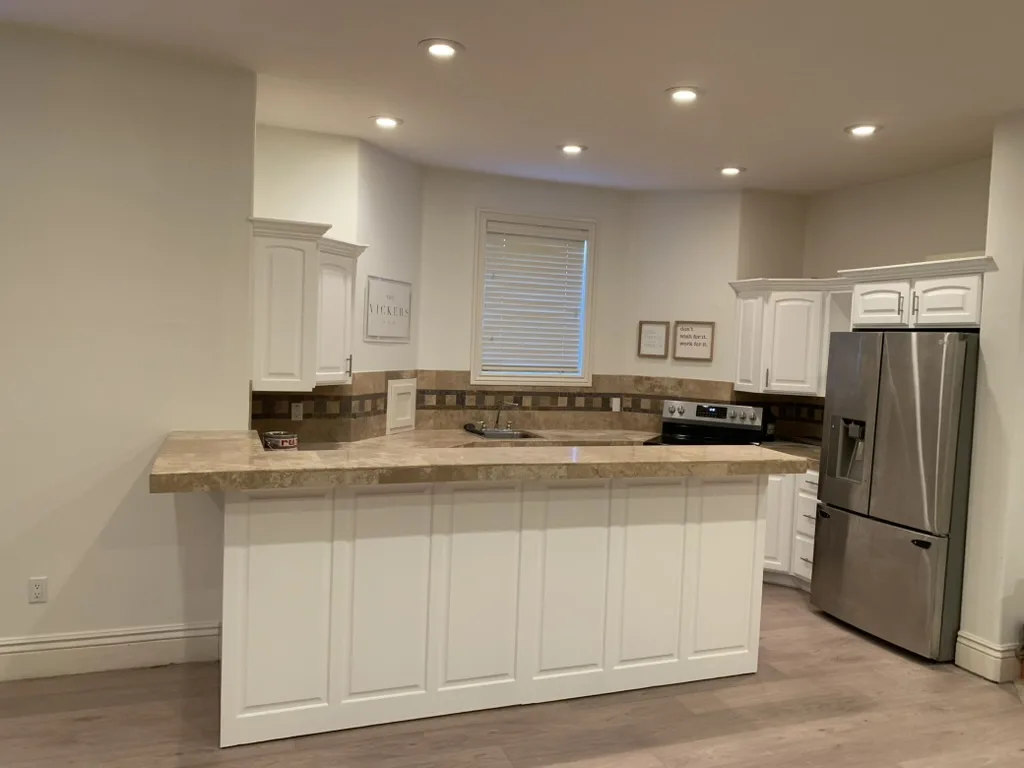
Keep the cabinetry that already works for your home
Cabinet refinishing in Salt Lake City starts with a practical question: do your cabinets need a different finish, or do they need a different structure? A dated color does not automatically mean the cabinet boxes have reached the end of their usefulness. If the layout suits your household and the cabinetry is sound, refinishing gives you a way to reconsider its appearance while retaining the storage you already know. White Fox Cabinets brings 14 years of cabinet refinishing experience to that conversation. Tell us what you like about your kitchen, what bothers you, and which surfaces show the most wear.
The right recommendation depends on the existing material, the coating already on it, and the result you want. Solid wood, veneer, manufactured panels and previously painted cabinets can present different preparation needs. A surface that looks smooth in a photograph may have loose veneer, peeling layers or damage near the sink. Those details matter more than the age of the color. An assessment should distinguish cosmetic wear from a problem in the cabinet itself, so the proposed finish addresses the right issue.
What cabinet refinishing changes
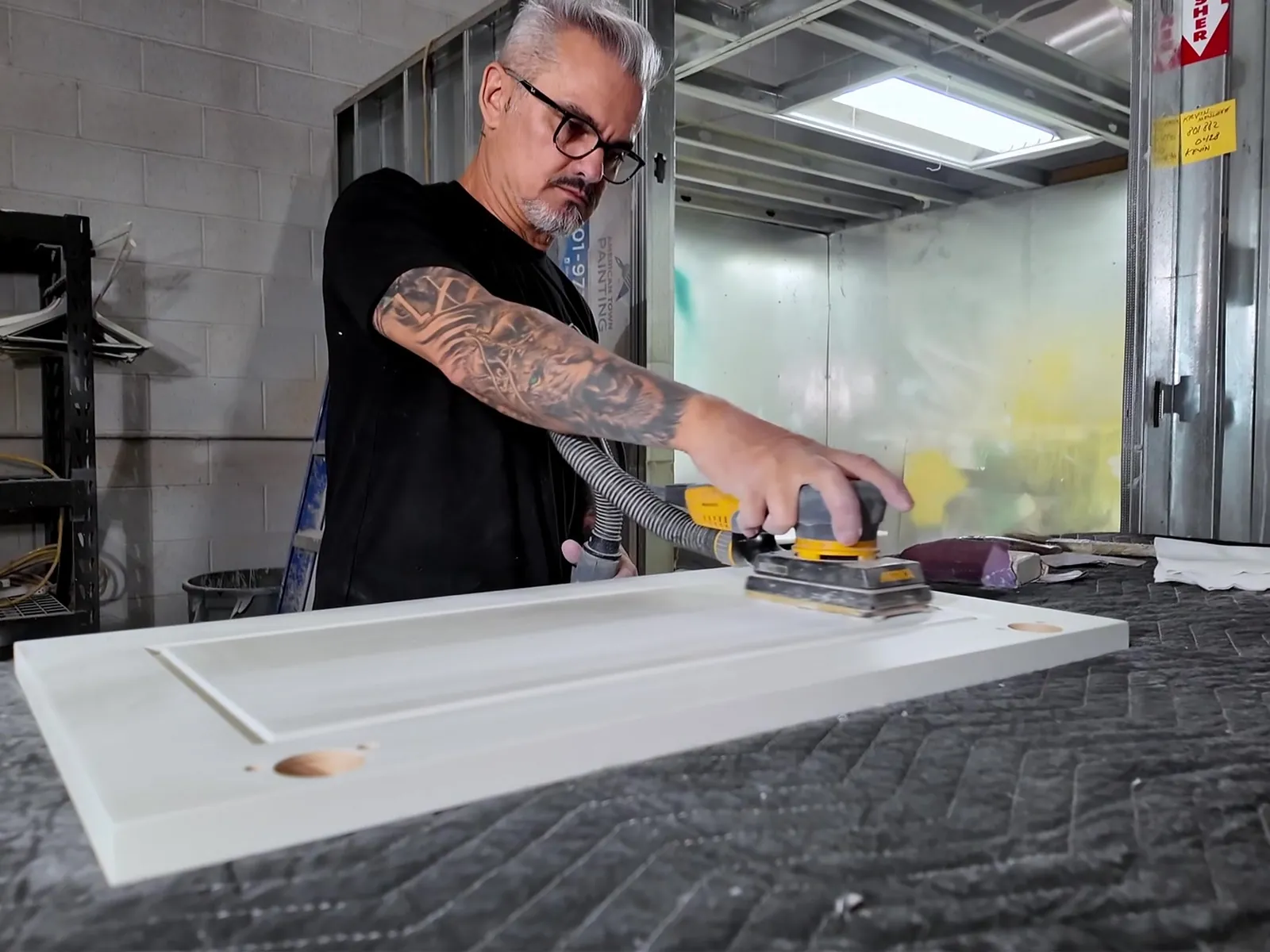
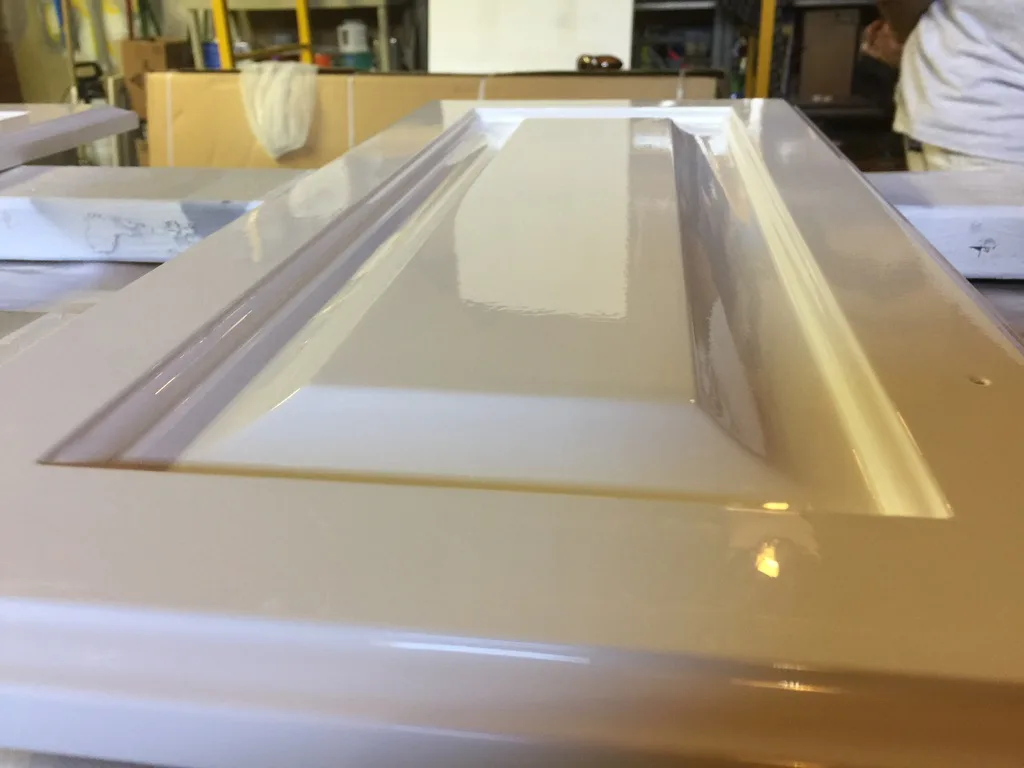
Refinishing focuses on the cabinet surfaces and their finish. Depending on the material and the selected approach, the work may involve preparing an existing coating, removing unsuitable layers, addressing visible defects and applying a compatible finish. A painted look and a wood-toned look are different design choices. Painting changes the color with an opaque coating. A stain or clear finish preserves more of the wood's visible character, though the existing species, grain and prior finish affect what can be achieved.
Bring a reference photo if you have one, but treat it as a direction rather than a promise that every wood will look identical. Grain patterns remain part of the surface unless the agreed preparation specifically addresses them. Knots, joints, edge profiles and natural variation can also remain visible. Discuss how much character you want to retain before choosing a sample. A finish that suits a smooth cabinet door in an inspiration image may look different on an oak door with pronounced grain.
An assessment before the finish selection
Begin with the condition of the boxes, doors and drawer fronts. Look for areas where the finish has worn through, cabinet edges that receive repeated contact, hinges that no longer hold securely and drawers that catch. Under-sink cabinets deserve particular attention because stains or swelling can indicate moisture exposure. The cause of ongoing moisture needs attention before a surface treatment is selected. A new coating cannot make a persistently wet or structurally damaged panel sound.
Next, review what will be included. Door faces, door backs, drawer fronts, exposed end panels, face frames, toe kicks and cabinet interiors are separate surfaces. A clear scope identifies which of them will be refinished and which will remain as they are. This is also the point to discuss repairs, replacement fronts and hardware changes. Adding these decisions after the finish has been chosen can change preparation requirements and the appearance of the completed cabinets.
The cabinet refinishing process
The preparation plan should follow the existing cabinet condition and the finish being used. Cleaning removes residue that could interfere with coating adhesion. Preparation may include sanding or other suitable treatment of the existing surface, along with agreed repairs. Any failing coating needs an appropriate response rather than being hidden beneath another layer. The aim is a stable, suitable surface for the selected finish, not simply a change in color over whatever is already there.
Doors and drawer fronts need an organized handling plan. Their positions, hardware and orientation affect how they fit when reinstalled. Discuss which components will be removed and where each part of the work will happen. The project scope should also describe protection for nearby counters, flooring and appliances. A homeowner should understand which areas need to be cleared and how kitchen access will be handled before preparation begins.
The coating stage follows the preparation and the product requirements. White Fox also offers cabinet painting with a smooth spray finish when an opaque color is the chosen direction. Discuss finish appearance, sheen and how the cabinet material may influence the result. Drying and curing are separate considerations: a surface can feel dry before the finish is ready for normal cleaning or repeated handling. Follow the care instructions provided for the actual coating rather than a generic timetable from the internet.
Reinstallation brings the pieces back together. Door alignment, drawer movement, clearances and hardware placement should be reviewed alongside the visible finish. Look at the cabinetry in the room's normal light, including the sides and edges you see while using the kitchen. A final discussion should also cover cleaning methods and how to report any areas needing attention. These practical details help you understand the result without relying only on a photograph of the finished room.
Refinish versus replace: compare the actual problem
Refinishing makes sense to consider when the cabinet arrangement functions well and the main concern is appearance or surface wear. It retains the existing boxes and their footprint. Replacement is a different decision when you need major layout changes, the cabinets have substantial structural deterioration, or their storage arrangement cannot meet your needs. Compare the condition and function of the cabinetry before comparing colors. Keeping a cabinet that no longer works for you may leave the original problem unresolved.
There is also an option between refinishing existing doors and replacing an entire kitchen: new doors and drawer fronts on suitable existing boxes. That approach changes the door style while keeping the cabinet structure. It still requires attention to measurements, overlay, hinge compatibility and matching exposed surfaces. If you like the layout but dislike an ornate door profile, ask about replacement fronts alongside refinishing. If you like the door style but dislike the finish, refinishing may be the more relevant starting point.
Choose colors and hardware in the room
Evaluate cabinet samples against the elements you plan to retain. Countertops, backsplash tile, flooring and adjacent trim can make the same cabinet color read warmer or cooler. Consider daylight and evening lighting, as well as how upper cabinets and lower cabinets appear in shadow. Compare a small group of options with a clear reason for each one. A sample seen in your own kitchen is more useful than a color selected only from a phone screen.
Hardware is part of this decision. Existing pull holes limit straightforward replacements unless filling and new drilling are included in the plan. Hinge type can influence what remains visible when the doors are closed. Coordinate those choices before the finish work so the preparation reflects the hardware you intend to use. Our cabinet design consultation is available for discussing colors, finishes, hardware and layout together.
Start with your Salt Lake City cabinet project
Use the quote form below to describe your cabinetry, the finish you have in mind and any damage you have noticed. Tell us whether the layout is staying and whether you are considering replacement fronts or hardware. Clear photographs of the room and close-ups of problem areas help frame the discussion; measurements and an assessment establish the scope. For a wider renovation, explore our Kitchen Remodeling and Bathroom Remodeling pages. The refinishing decision can then sit within a considered plan for the whole space.
Cabinet Refinishing questions
Can my existing cabinets be refinished?
That depends on their material, condition and existing coating. Sound cabinets with suitable surfaces may be candidates. Peeling finishes, loose veneer, swelling and structural damage need assessment before a refinishing approach is chosen.
Is refinishing the same as cabinet painting?
Painting uses an opaque color. Refinishing describes work on the existing cabinet surfaces and may involve a painted finish or an appropriate wood finish. The selected method should match your cabinets and the appearance you want.
Should I refinish cabinets or replace them?
Compare structure and function first. Refinishing is worth considering when the layout works and the concern is mainly the finish. Replacement may be relevant for major layout changes or substantial structural problems. Replacement fronts offer another option for suitable existing boxes.
Will wood grain still show?
It can. Wood species, the depth of the grain, preparation and the selected finish all influence the appearance. Discuss a representative sample and your expectations about visible grain before finalizing the scope.
How should I care for refinished cabinets?
Follow the instructions for the coating used on your cabinets, including curing and cleaning guidance. Avoid assuming that a finish which feels dry is ready for cleaning or repeated handling. Ask for guidance before using abrasive cleaners or scrubbers.
